Specialist 1
Document intake agent
Identify submitted documents and associate each file with the supplier and checklist requirement.
Indexed supplier evidence

Procurement / Purchasing / Solution blueprint
Turn a collection of supplier documents into a review the procurement team can act on.
Business problem & expected outcomes
Missing documents and inconsistent handoffs slow down supplier setup. A complete checklist still needs a person to approve the relationship.
Check the submission against required evidence, prepare a missing-item list, and route a complete review to procurement.
How to measure the improvementChecklist completeness; time spent requesting missing documents; activation attempts without approval.
Supplier forms, the onboarding checklist, submitted documents, and purchasing-system identifiers.
Interactive workflow diagram
Check the submission against required evidence, prepare a missing-item list, and route a complete review to procurement.
Supplier forms, the onboarding checklist, submitted documents, and purchasing-system identifiers.
Designed around the work
An orchestrator passes evidence between specialists, checks that required facts are present, and holds the workflow at the review boundary.
Identify submitted documents and associate each file with the supplier and checklist requirement.
Check required documents, conflicting details, and missing evidence against the onboarding checklist.
Prepare the review package and track ownership. Supplier activation remains with the authorized procurement owner.
Bind only the operations this workflow needs. Keep credentials in ART and choose the permitted tools explicitly.
Keep files in scoped folders and record checklist status and review ownership in a dynamic table.
Keep files in scoped folders and record checklist status and review ownership in a dynamic table.
Package the checklist, instructions, and expected output as a reusable skill.
Require an authorized procurement owner to approve supplier activation; missing mandatory evidence stops the handoff.
ART product mapping
Agent Lab prepares the work described below. These are the capabilities that support this workflow.
Keep the supporting files accessible within the review’s project and environment.
Track the case, owner, source references, and review state as structured records.
Package the checklist, instructions, and expected output as a reusable skill.
Coordinate specialist agents with explicit inputs, handoffs, and review checkpoints.
Pause the proposed action for the designated owner to review its evidence.
The implementation, step by step
Supplier forms, the onboarding checklist, submitted documents, and purchasing-system identifiers.
Agree the trigger or manual request, record identifiers, and the process owner.Check the submission against required evidence, prepare a missing-item list, and route a complete review to procurement.
Define instructions, permitted tools, and the expected output. Keep missing information explicit.Require an authorized procurement owner to approve supplier activation; missing mandatory evidence stops the handoff.
Configure the selected policy or approval capabilities before enabling write actions.Checklist completeness; time spent requesting missing documents; activation attempts without approval.
Compare outputs with reviewed examples and test incomplete, conflicting, and unauthorized inputs.Before you build
A document inventory, resource access scopes, and a file-retention policy.
Typed fields, record identifiers, relationships, and a table-retention policy.
A process checklist, example inputs, and a reviewer-approved output format.
A responsibility for each agent, typed handoff data, stopping conditions, and an accountable workflow owner.
Named reviewer roles, escalation ownership, and timeout and rejection behavior.
Also prepare an ART project and environment, the model configuration appropriate to your agent, an accountable process owner, and approved sample data.
Authority stays with your team
Require an authorized procurement owner to approve supplier activation; missing mandatory evidence stops the handoff.
Explore execution governanceMap the source material and responsible owners first. Where the selected components require system access, configure scoped APIs or tools. A document-based pilot can start with approved material already available in the workspace.
Keep source references with the prepared output and review representative results before expanding scope. If the implementation includes executable actions, define their required facts and authority first. Apply retention to any stored records, files, or memory used by the case.
Build evidence from your own work
Checklist completeness; time spent requesting missing documents; activation attempts without approval.
Choose a bounded sample of completed cases, record the current process, and agree review criteria with the process owner.
Use approved sample data and read-only connections. Compare prepared outputs with reviewer expectations, including incomplete and conflicting inputs.
Enable a limited set of actions only after the team accepts the results. Check approvals, failures, and handoffs before increasing scope.
Make it your workflow
Start with supplier documents. Connect your approved tools, configure the review boundary, and adapt the output to your team's process.
Open your ART workspace to configure this use case.
Discuss the setup with usIndustry & department library
3 use cases in Procurement
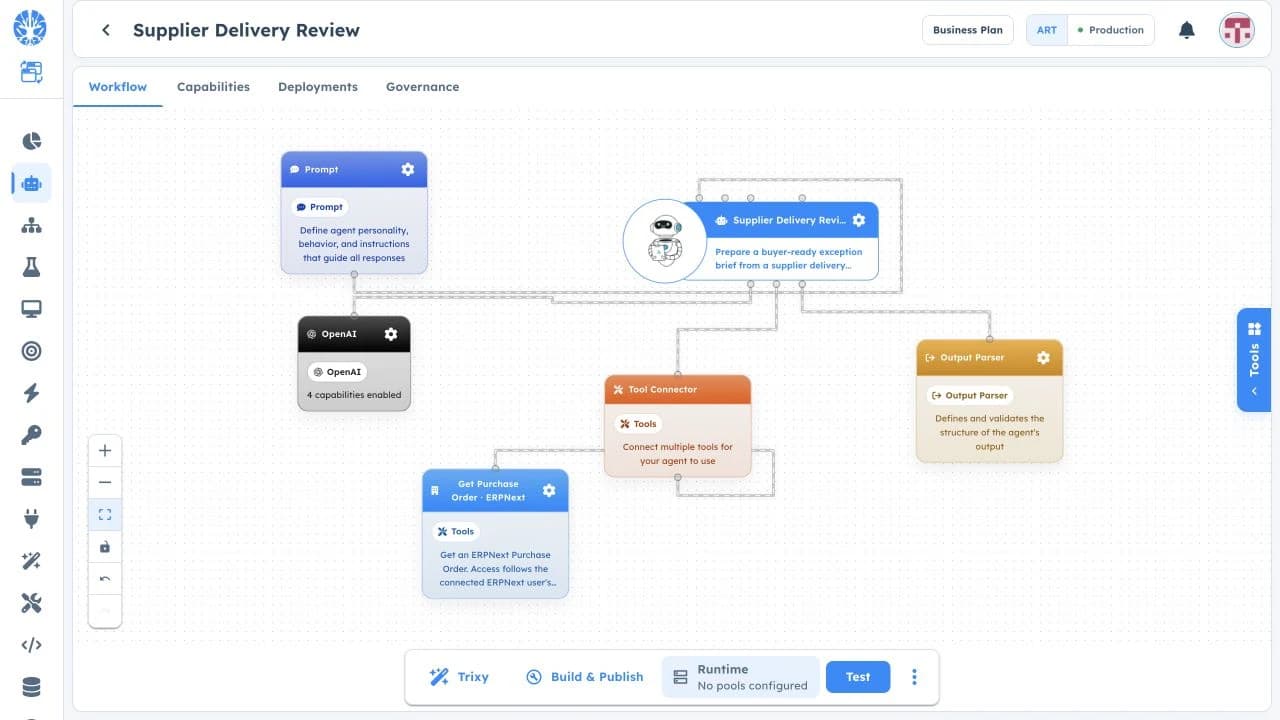
A supplier changes a delivery date. Keep the order, the decision, and the people affected connected.
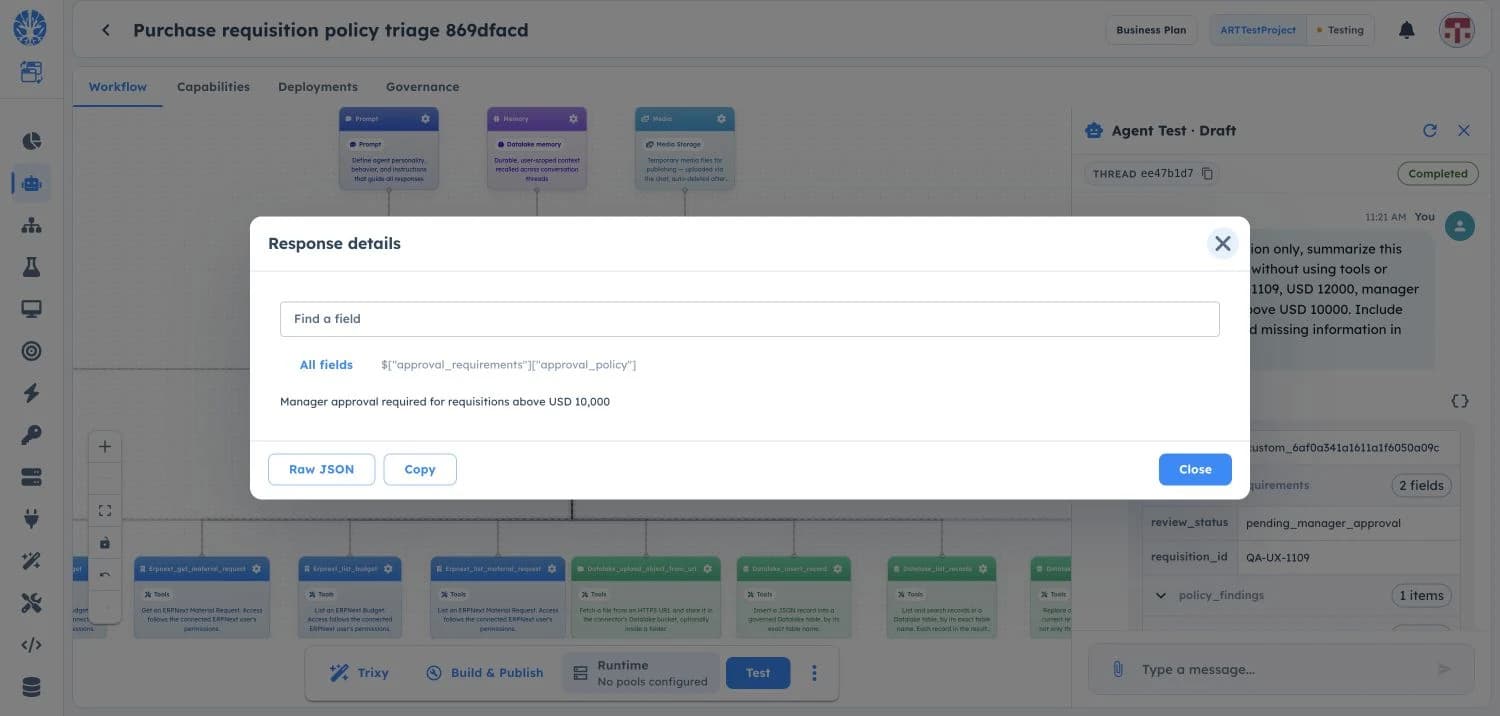
Prepare a complete requisition before the buyer reviews it.
Bring renewal dates and contract evidence into the same review.
Procurement / Let’s explore the fit
Tell us where work slows down. We’ll discuss how ART could fit your process, your systems, and the decisions your team needs to own.