The Hacker Doesn't Need to Break the Door Anymore - So What Are They Attacking?
How cloud-native systems are changing the attack surface

The Door Isn't the Only Way In Or Is It?
For years, cybersecurity focused heavily on protecting the network perimeter.
Firewalls controlled traffic, network segmentation separated systems, and access rules determined which connections were allowed. If an attacker couldn't get through the perimeter, the internal systems were considered safer.
But modern applications have changed the environment.
A single application can now contain dozens of microservices running across containers, multiple clouds and on-premises infrastructure. These services communicate constantly, and workloads can move as the application scales.
There may no longer be one clear "inside" to protect. So, the attacker doesn't always need to break through the main door. They can look for weaknesses between the rooms.
When Every Service Can Become a Target
Imagine an e-commerce application with separate services for authentication, payments, orders, inventory and notifications. These services need to communicate, but should every service automatically be allowed to communicate with every other service?
Probably not.
If the payment service is compromised, an attacker could try to use its existing access to reach other systems. This is lateral movement. This is where Zero Trust moves deeper into the application.
Instead of asking only:
“Can this network connection reach the service?”
we also ask:
“Which service is making the request, and what is it actually allowed to do?”
From Network Identity to Service Identity
NIST SP 800-207A extends Zero Trust principles to cloud-native applications by combining network-tier and identity-tier policies.
Network policies can control networks, ports and traffic paths.
Identity-based policies go further by identifying the specific user, service or workload making a request.
For example:
“Service A → Service B”
can become:
“Service A → Service B → HTTPS → GET → /public”
The service can retrieve specific information without automatically receiving permission to perform every other operation.
This is least privilege (opens in a new tab) applied to service-to-service communication.
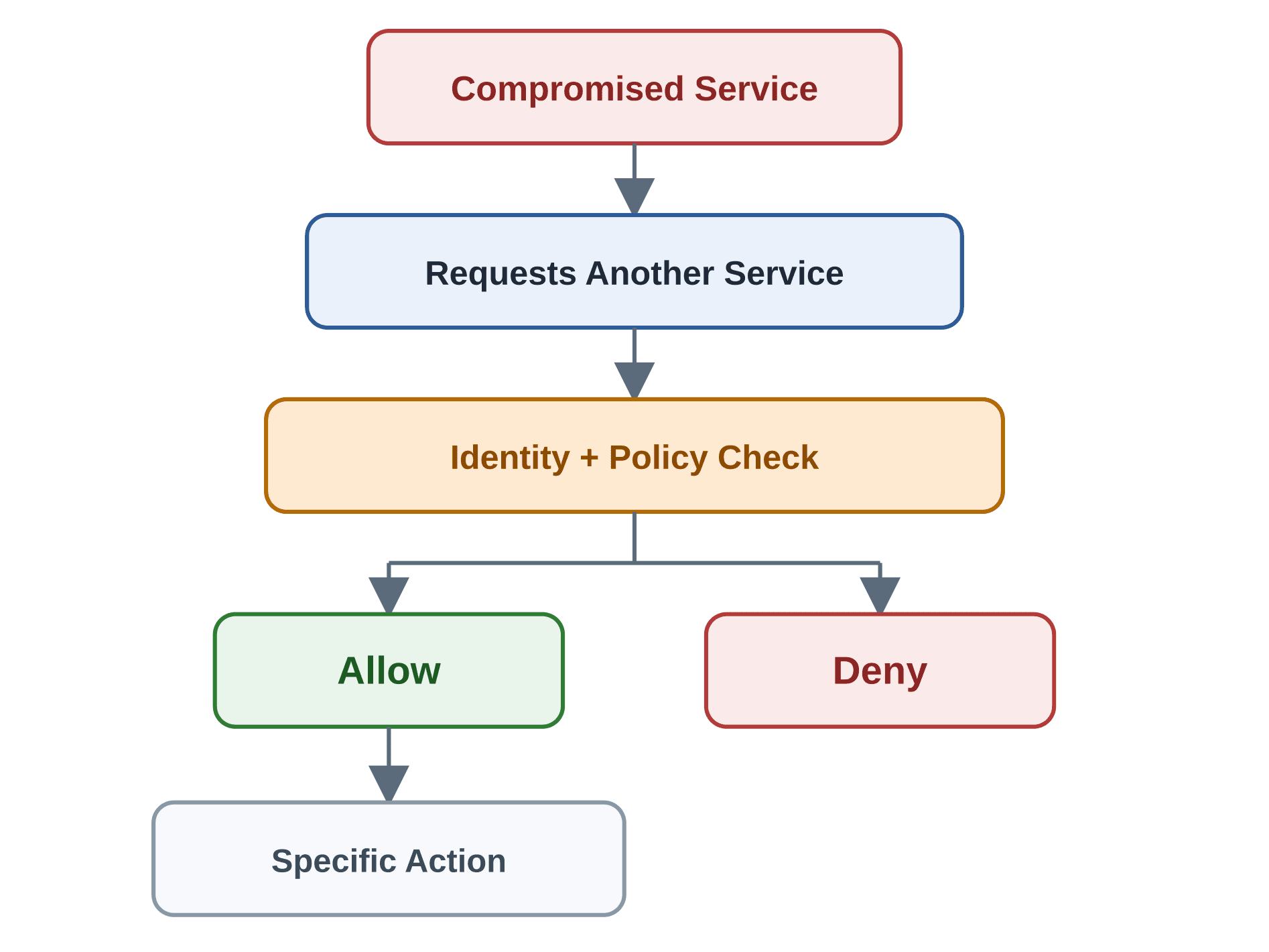
The goal is not only to prevent the initial compromise, but also to limit what happens after it.
The New Attack Surface Is Inside the Application
This is where technologies such as service meshes become useful.
A service mesh can help enforce communication policies between application services. Proxies can act as Policy Enforcement Points (opens in a new tab), while technologies such as mutual TLS (mTLS) can help secure communication and establish workload identity.
The basic idea is:
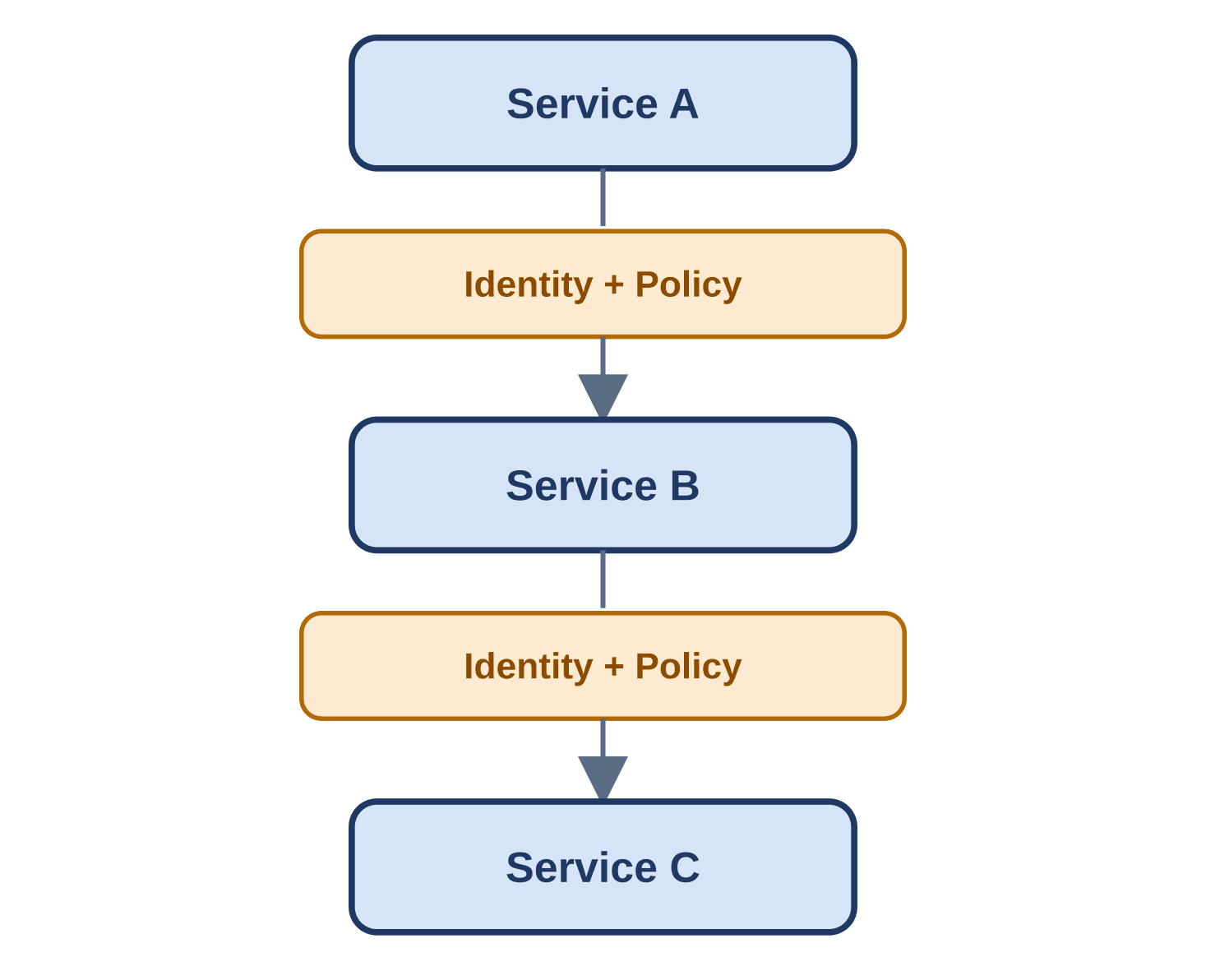
Trust doesn't automatically flow from one service to another.
Each important interaction can be evaluated.
Network Security Isn't Dead
It would be easy to interpret this as:
“Network security → Identity security”
But NIST SP 800-207A does not recommend replacing one with the other.
Network controls are still important for segmentation, connectivity and regulatory requirements.
Identity-based controls provide more granular access decisions.
Together:
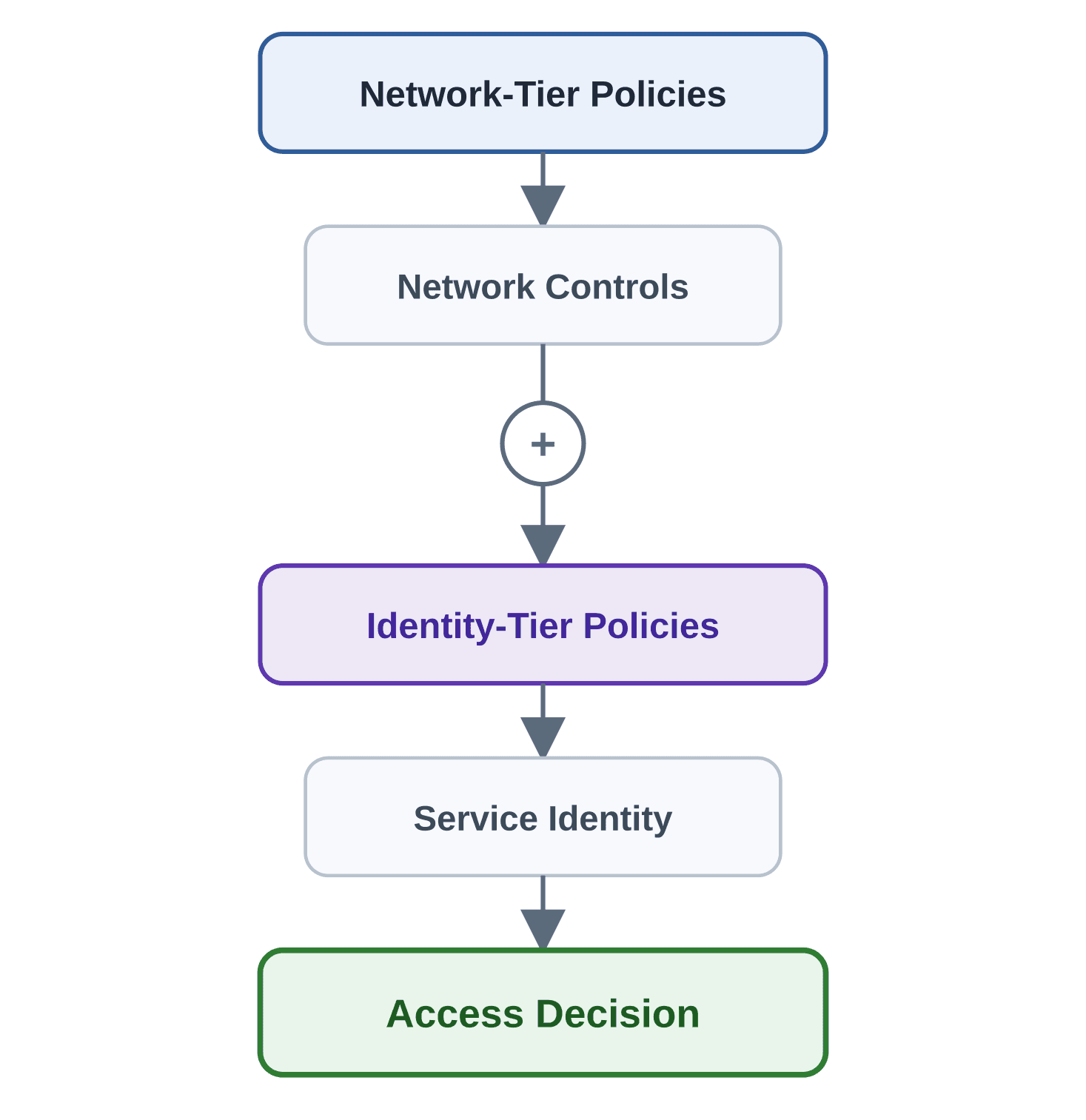
One provides the broader boundary. The other controls what can happen inside it.
And Then We Add AI Agents
Now imagine one of those services is an AI agent.
The agent might have access to databases, APIs, documents or business workflows. It may also be able to call tools or trigger actions.
So the question becomes:
“What is this agent allowed to access, which tools can it use, and what actions can it perform?”
The same Zero Trust principles apply:
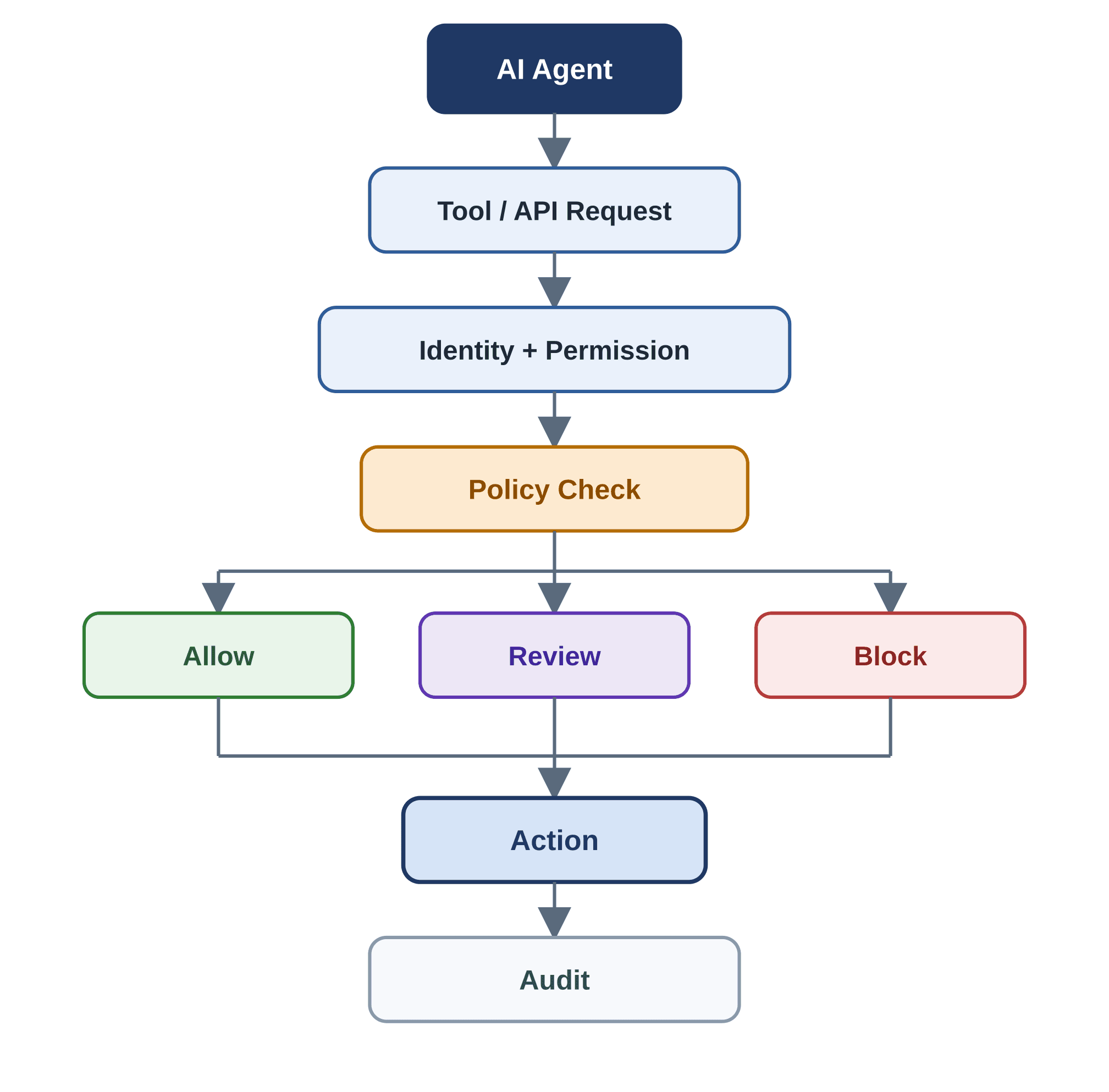
The objective is to make an agent's permissions specific, controlled and observable.
Where ART Fits In
This is where the same principles connect naturally with A Realtime Tech (ART) (opens in a new tab). – Learn about core of ART
ART brings AI agents (opens in a new tab), workflows, tools and business systems into a governed environment, with concepts such as scoped access (opens in a new tab), controlled tool usage, human approval and execution traceability.
For an AI agent interacting with real systems, a simplified flow could be:
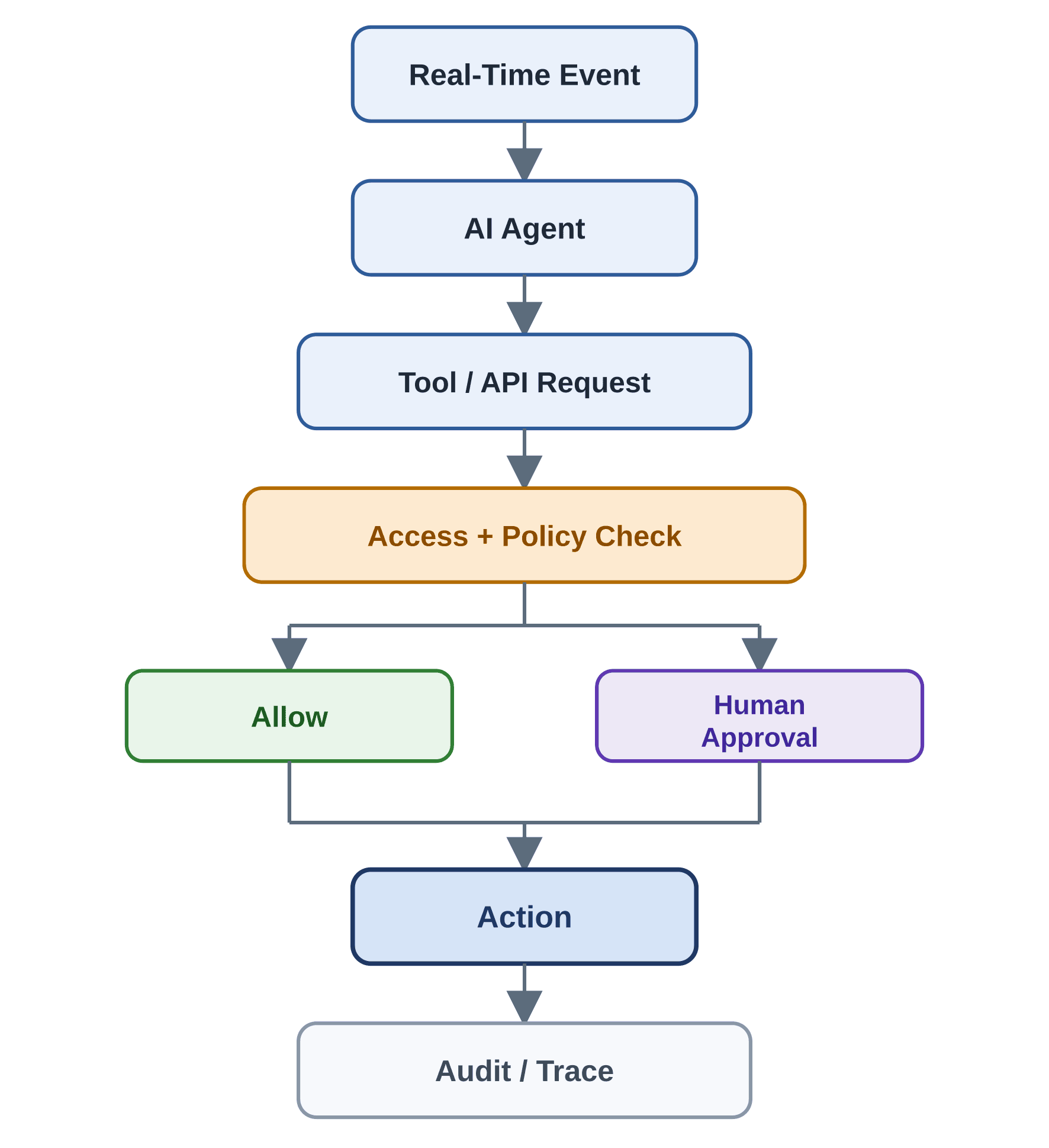
The underlying principle is similar to Zero Trust:
“Don't assume trust. Evaluate what is requesting access, what it needs and what it is allowed to do.”
You can learn more about ART here: A Realtime Tech (opens in a new tab)
So What Is the Hacker Actually Attacking?
The answer is no longer simply:
In cloud-native environments, attackers can target identities, credentials, APIs, workloads, service-to-service communication and misconfigured permissions. With AI agents, their tools, permissions and workflows can become part of that attack surface too.
The attack surface is no longer only around the application. It is increasingly inside the application and between the services that make it work.
Conclusion
Modern applications have made the traditional network perimeter less sufficient on its own. Cloud-native systems contain constantly changing services that communicate across multiple environments, making identity and application-level access controls increasingly important. NIST SP 800-207A addresses this by combining network-tier controls with identity-tier policies and granular, least-privilege access. As AI agents gain access to tools and business systems, the same principles become even more important.
The hacker doesn't always need to break the door anymore - sometimes the real target is what the door already allows inside.
Sources and further reading
- NIST Special Publication 800-207 - Zero Trust Architecture - NIST SP 800-207 (opens in a new tab)
- NIST Special Publication 800-207A - A Zero Trust Architecture Model for Access Control in Cloud-Native Applications in Multi-Location Environments - NIST SP 800-207A (opens in a new tab)
- A Realtime Tech - ART (opens in a new tab)
About the Author

Shreya S
AI Engineer
AI Engineer specializing in AI-agent vulnerability assessment, security evaluation, and trustworthy AI.
View on LinkedIn (Shreya S, opens in a new tab)Further Reading

Your API, Cloud and Database Are Connected. What Happens When One of Them Turns Against You?
The modern attack surface isn't one system. It's everything connected to it.

Your Firewall Is Working. But Is Your System Actually Secure?
Why modern cybersecurity is moving beyond the network perimeter